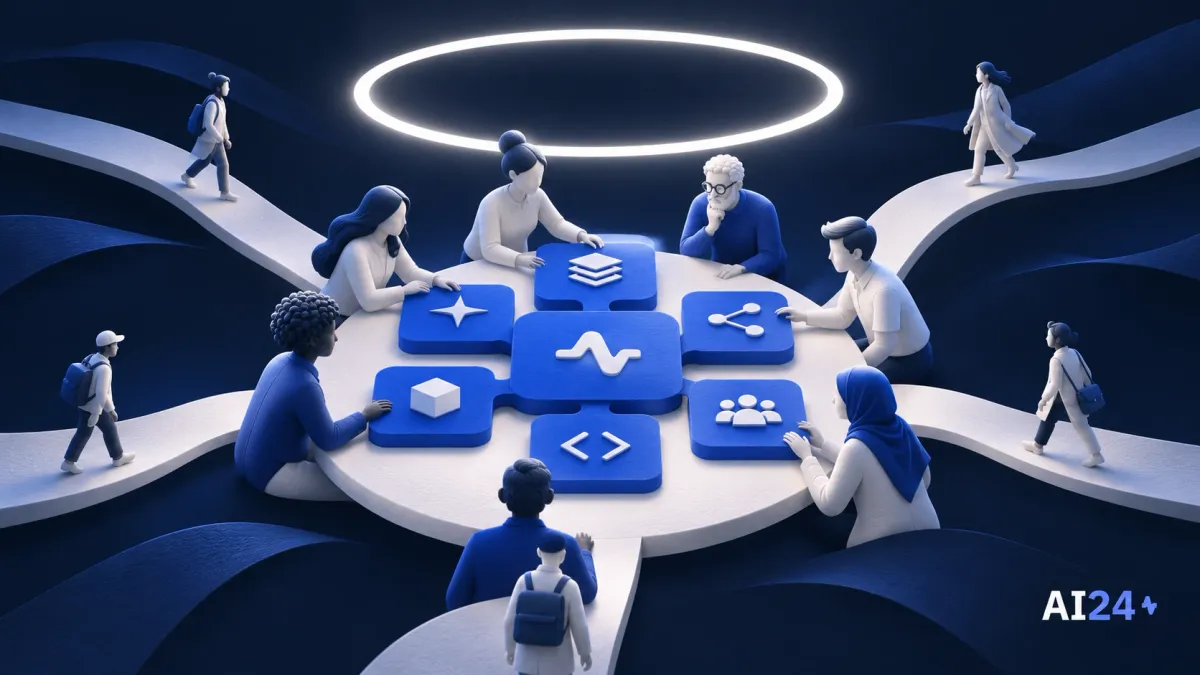
Anthropic announced on October 22, 2026 that it is donating the Agent Skills standard to the Agentic AI Foundation, or AAIF, under the Linux Foundation. This changes the standard's stewardship rather than launching a new user feature. The company presents it as a continuation of its commitment to keep Agent Skills open, community-driven and vendor-neutral.
Anthropic says the standard had recorded nearly 280 million installs, more than 1 million published skills and integration by more than 70 agent platforms at the time of the announcement. Examples include ChatGPT, Cursor, GitHub Copilot and VS Code. These are company adoption figures, not a count of unique people.
A shared home for the standard
Agent Skills launched in October 2025, and the standard was published in December 2025. Separating those milestones explains why this announcement concerns another stage: the framework governing the format from now on. The central question is who stewards a standard used across platforms, not which new button appeared in a chat interface.
When a format serves more than one system, decisions about it also affect people outside its creator's products. That makes vendor neutrality central to the announcement. It describes Anthropic's stated direction, but does not mean every platform implements every capability in the same way.
Organizations should also distinguish a standard from a product when reading the news. Transferring stewardship does not, by itself, announce changes to account eligibility, paid plans or individual features. It does not establish that a particular skill works identically across the listed environments.
AAIF already received MCP
Anthropic co-founded AAIF with Block and OpenAI in 2025 and had already donated the Model Context Protocol, or MCP, to it. Agent Skills adds another standard to that framework. The connection is institutional: agent-related standards are moving into a shared home under the Linux Foundation.
The announcement does not present Agent Skills and MCP as the same standard. The earlier donation provides context for the current choice of organization. Their names should remain distinct even when both appear in discussions of agents and cooperation between systems.
Reading the adoption figures
Nearly 280 million installs do not mean nearly 280 million users, and more than 1 million published skills do not measure each skill's quality. Likewise, the platform count indicates integration of the standard, not identical experiences or access conditions.
The concrete development concerns governance and the framework intended to support future development. Developers and organizations have a reason to follow decisions about a format they use. Whether a particular skill is compatible with their working environment remains separate from who holds responsibility for the standard.