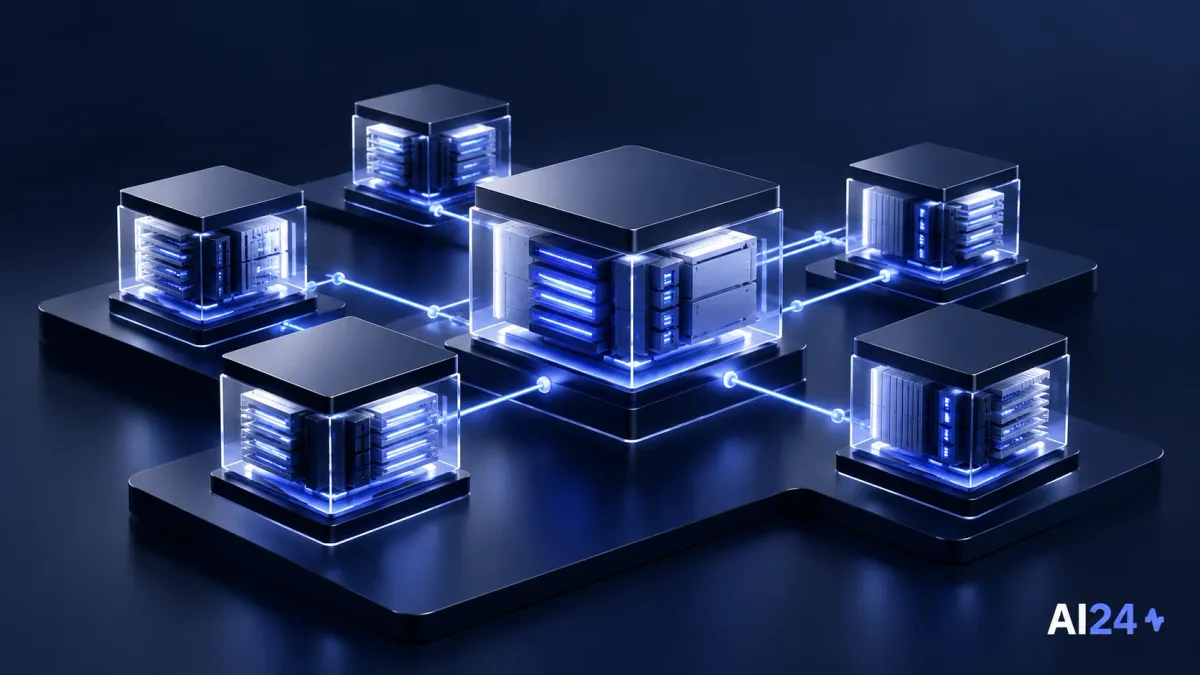
Mueon announced on 15 October that it had raised $65 million in a Series A round to develop computing infrastructure that combines computation, memory and other components in modular 3D units. The money will expand the teams and advance the platform to system testing and production readiness. This remains a development programme: the announcement does not present a system now available for widespread purchase or prove that customers have already achieved particular savings.
The round was led by Maverick Silicon, with Intel Capital and other investors. According to Intel Capital's funding announcement, the company's cumulative funding has exceeded $80 million. At the heart of the development are units called Cubelets, which are designed to reduce the physical distance that information travels between components of the system. For anyone developing or operating AI services, this is an attempt to deal with infrastructure costs below the model layer itself.
Why the distance between components matters
An AI model needs computation, but also continuous access to information. The processor does not work alone: data must come from memory, move between components, and be stored for further processing. Therefore, assessing a system by the power of the accelerator alone leaves out some of the work it needs to do. A fast-computing system can still wait for information elsewhere in the process.
Mueon suggests considering computation and memory as part of an integrated system design. Instead of starting with a single component and connecting the other parts around it, the company designs units that combine several functions closely together. Connections, power supply and heat dissipation are included in the same engineering effort. According to the company, this can change the compute density and the cost of data transfer within the system.
Proximity alone does not guarantee a commercial outcome. Putting more components into a smaller volume can also change cooling requirements, accessibility to maintenance, and how the system can be expanded. Therefore, the practical question is how the design functions under continuous load and real software. An architecture diagram explains the idea, but a customer also needs to know how the system behaves over time.
What the funding is intended to enable
According to the announcement, the money will help expand engineering and operations teams, advance system validation and deepen work with customers. The company describes activities in chip and system architecture, advanced integration of components, software and coordination of work between them. Another path is testing with technological and industrial partners on the way from prototype to manufactured product.
The distinction between the stages is important. Financing development is not the same as financing a commercial supply that has already begun. Testing a single component is different from testing a full system, and a system operating under experimental conditions still needs to fit the supply chain and operational routine. The announcement places Mueon on a path of development and validation, without claiming that all those stages have been completed.
The software is also part of the story. New hardware can be physically interesting and still require a lot of work to run existing AI workloads. Mueon describes developing a software and orchestration layer that will support familiar frameworks and deployment processes. For development teams, the extent of the customizations required will be part of the real cost of adopting the system.
How to read the efficiency target
Mueon presents a target of up to 10 times improvement in energy efficiency and cost, within a similar floor space to that of a server rack. This is a target that the company presents, not an independent result that can be applied to any model or any data center. The words "up to" allow for differences between workloads, system configurations and comparison conditions. There is no basis in the notice to guarantee the customer uniform savings.
To understand such a figure, it will be worth examining exactly what was measured when detailed results become available. Cost per component, cost per operating hour and cost per completed task are different questions. Even a large number of operations does not guarantee that a business task has been completed correctly. A system can produce more results, but if they need to be re-executed, savings in one layer may disappear in another.
The same principle applies to electricity. A useful comparison should explain which components were included in the measurement, what were the cooling requirements, and what was the load at the time of the test. These are questions to evaluate the platform when we have detailed system data. These questions do not imply that the company has hidden costs or that its approach will fail. At this stage, they define what is needed to move from an engineering promise to a purchasing decision.
What teams can do right now
Operators of AI services currently have no reason to switch providers solely because of the funding round. A more useful action is to define the existing bottleneck: response time, memory limit, parallel capacity, or cost per successfully completed task. Once the requirement is documented, it will be possible to compare a new platform to the same starting point, instead of changing the test objective each time.
A team testing new hardware can prepare a representative workload including hard cases, not just a short demo. It is advisable to document the quality of results, waiting time, and effort required for deployment and maintenance. There is no need to predict which architecture will win. The goal is to allow the data to show whether the change in infrastructure solves the problem for which the move was considered in the first place.
What it means to bet on the whole system.
Mueon's funding supports an attempt to change how computing components connect to one another. It joins a broader question that occupies every service provider: how much useful work can be done within limits of money, energy, and space. For the user of the AI service, the change will only be significant if it translates into a more reliable, more available or cheaper service in the future under clear terms.
For now, the company has secured additional resources to advance testing of its approach. The remaining questions will depend on system data, manufacturing feasibility and work with customers. The funding therefore deserves attention from AI infrastructure teams, while maintaining a clear distinction between the financing already announced, the system under development and the benefits the company hopes to provide.
Alongside performance, the availability of support, maintenance and recovery process should also be considered before making a purchase decision.